Refining Your Digital Line Work: A Practical Review of Liners 1.0 Procreate Brushes
In the expansive ecosystem of digital art tools, the quality of your line work often dictates the perceived professionalism of a piece. While software capabilities have advanced significantly, the tactile feel of the brush remains a critical component of the creative process. For artists working within the iPad environment, Liners 1.0 Procreate Brushes offers a specialized solution designed to address common frustrations with default stroke engines. This set is not merely a collection of generic pens; it is a curated toolkit aimed at producing beautiful textured lines that mimic traditional media while leveraging digital precision.
Understanding whether this specific brush set aligns with your workflow requires a look beyond marketing claims. It involves evaluating the technical specifications, the nature of the textures provided, and how these tools compare to both native options and other third-party alternatives. This analysis explores the practical applications of Liners 1.0, helping you determine if it is the right resource for your artistic needs.
The Distinctive Appeal of Textured Liners
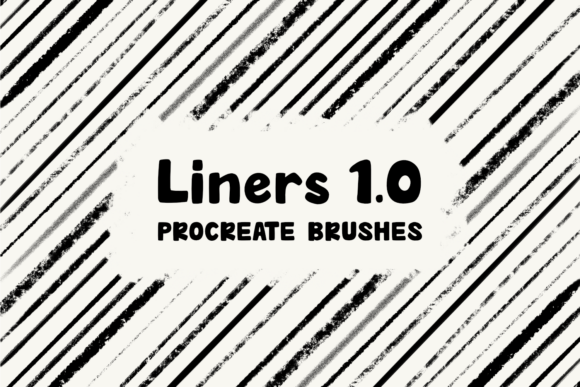
Standard digital brushes often suffer from a "plastic" or overly uniform appearance. The lines are too perfect, lacking the organic irregularities that give hand-drawn art its character. Liners 1.0 Procreate Brushes attempts to bridge this gap by integrating subtle texture into the stroke engine. The set includes 13 beautiful liner brushes, each engineered to introduce varying degrees of grain, pressure sensitivity, and edge variation.
The primary value proposition here is efficiency. Creating custom textured brushes from scratch in Procreate can be time-consuming and technically demanding. It requires a deep understanding of shape sources, grain dynamics, and streamline settings. By providing a pre-configured .brushset file, this product allows artists to bypass the technical setup and focus immediately on creation. The filesize of 46.2 MB suggests a high level of detail in the brush assets, likely including complex grain overlays that contribute to the realistic feel of the lines.
Technical Requirements and Compatibility
Before considering any digital asset, compatibility is a non-negotiable factor. These brushes are exclusively compatible with Procreate 5 or higher. This is a crucial distinction for users who may be operating on older iOS versions or using different drawing applications such as Clip Studio Paint, Adobe Fresco, or Autodesk Sketchbook. The developers explicitly state that these brushes will not work in any other application.
This limitation is standard for proprietary brush formats but serves as an important filter for potential buyers. If your workflow involves switching between multiple apps, you will need to recreate similar effects manually in those other programs. However, for dedicated Procreate users, the integration is seamless. The requirement for Procreate 5 ensures that the brushes can utilize modern rendering engines, resulting in smoother performance and more accurate pressure response on supported Apple Pencil models.
Comparing Approaches: Default vs. Specialized Tools
When evaluating Liners 1.0 Procreate Brushes, it is helpful to compare them against two main alternatives: the default Procreate library and free community resources.
Default Procreate Brushes: The native "Studio Pen" or "Technical Pen" in Procreate is excellent for clean, vector-like lines. They are stable and predictable. However, they lack inherent texture. To achieve a textured look with default tools, an artist must either draw over a textured paper layer or adjust complex brush settings individually. Liners 1.0 offers a middle ground, providing textured strokes that remain legible and controlled without requiring additional layers or post-processing.
Free Community Brushes: The internet is replete with free brush sets. While cost-effective, these often lack consistency. A free set might include ten brushes, but only two may be usable, with the rest suffering from lag, poor pressure curves, or inconsistent opacity. In contrast, a paid, curated set like Liners 1.0 typically undergoes rigorous testing. The inclusion of 13 distinct variations suggests a thoughtful range of weights and textures, reducing the need to hunt for the "right" tool mid-project.
Practical Use Cases and Workflow Integration
The versatility of textured liners makes them suitable for various artistic styles. Here are some scenarios where these brushes excel:
- Editorial Illustration: Publications often favor a hand-drawn aesthetic that feels approachable yet polished. The textured lines can add warmth to technical diagrams or character sketches.
- Concept Art and Storyboarding: Speed is essential in these fields. Having a brush that instantly provides visual interest without needing heavy shading can accelerate the ideation phase.
- Digital Journaling and Lettering: For those who combine handwriting with illustration, textured liners can make digital lettering feel more organic and less rigid.
Importing these tools into your workflow is straightforward. Users download the files to their iPad or a connected cloud service, unzip the file, and tap on the unzipped content. Alternatively, one can open the Procreate brush library, click the plus icon in the upper right corner, and locate the new set at the top of the library. This ease of installation reduces friction, allowing artists to test the brushes immediately upon purchase.
Evaluating Tradeoffs and Limitations
No tool is universally perfect. When considering Liners 1.0 Procreate Brushes, it is important to acknowledge potential tradeoffs.
File Size and Storage: At 46.2 MB, this is a relatively large brush set. While negligible for most modern iPads, users with limited storage or those who hoard hundreds of brush sets should consider their digital clutter. High-quality grain textures contribute to this size, so it is a reflection of quality rather than inefficiency.
Learning Curve for Texture Control: While easier than building brushes from scratch, textured liners still require adjustment. Artists accustomed to clean lines may need to practice controlling pressure to avoid excessive graininess in lighter strokes. The "beautiful textured lines" promised are dependent on the user’s ability to modulate their touch.
Specificity of Style: These brushes are designed for a specific aesthetic. If your work relies on hyper-realistic rendering or flat, vector-style graphics, textured liners may not offer significant value. They are best suited for styles that benefit from organic imperfection.
Making an Informed Decision
Choosing the right digital tools is a personal process influenced by style, budget, and workflow preferences. Liners 1.0 Procreate Brushes represents a solid investment for artists who prioritize line quality and seek to escape the sterile look of default digital pens. It is particularly well-suited for illustrators, designers, and hobbyists who want to elevate their sketching and line art with minimal technical overhead.
However, it is not a magic solution. If you are new to Procreate, mastering the default brushes might be a more foundational step before investing in specialized sets. Similarly, if you work across multiple platforms, the exclusivity to Procreate 5+ may limit its utility.
Ultimately, the decision rests on your current pain points. If you find yourself spending too much time trying to fake texture or if your line work feels too rigid, this set offers a targeted solution. By providing 13 carefully crafted options, it allows for experimentation and refinement, helping you discover the specific line quality that best communicates your artistic voice. As with any creative resource, the true value is realized not just in the purchase, but in the consistent application and adaptation of the tools to your unique projects.